Description
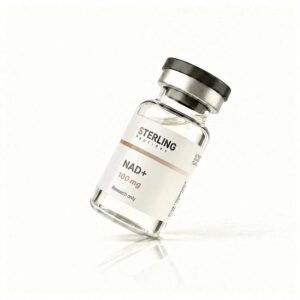
NAD+ research compound
NAD+ (nicotinamide adenine dinucleotide, oxidised form) is a coenzyme present in every living cell. It carries electrons in redox reactions, cycling between NAD+ and its reduced form NADH, and it is consumed as a substrate by enzymes including sirtuins, poly(ADP-ribose) polymerases (PARPs) and CD38. This makes NAD+ a standard reagent in research on cellular energy metabolism, mitochondrial function and NAD+-dependent signalling.
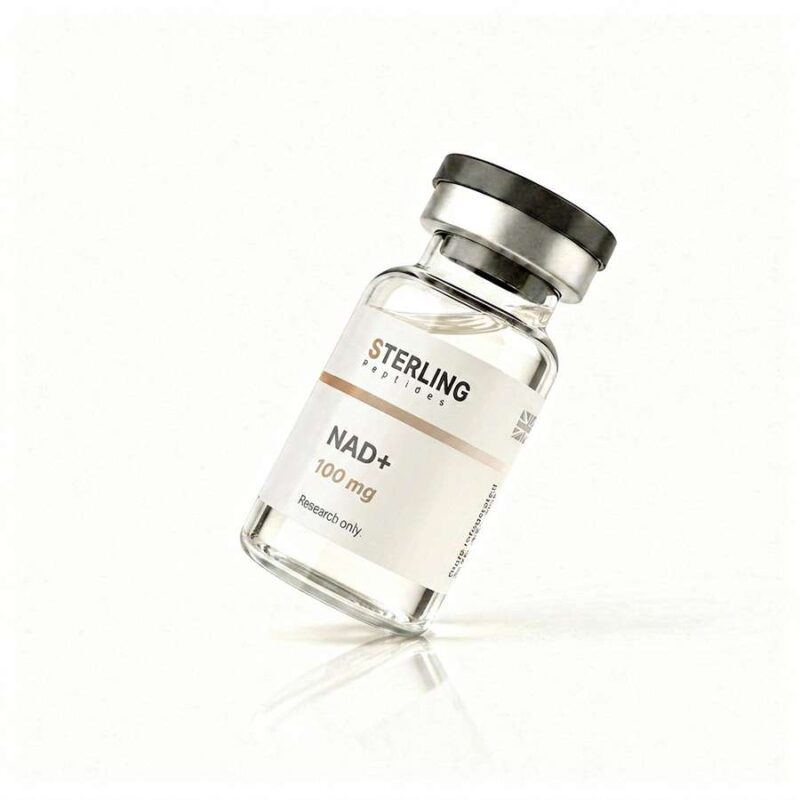
Although it is often listed alongside research peptides, NAD+ is a dinucleotide, not a peptide. Supplied as a lyophilised powder in a 100mg vial, for laboratory research only.
Specifications
| Name | NAD+ (β-nicotinamide adenine dinucleotide, oxidised form) |
|---|---|
| Class | Dinucleotide coenzyme |
| Molecular formula | C21H27N7O14P2 |
| Molecular weight | ≈ 663.4 g/mol |
| CAS number | 53-84-9 |
| Form | White to off-white lyophilised powder in a sealed glass vial |
| Size | 100mg |
NAD+ in the lab
Quality and testing
Read more about our process on the Quality & Testing page.
Storage and handling
Store the lyophilised powder at −20 °C, sealed and protected from light and moisture. NAD+ is sensitive to humidity, so allow the vial to reach room temperature before opening to limit condensation. Prepare solutions according to your laboratory’s validated protocols, using appropriate PPE.
Further reading
For the research background on NAD+, sirtuins and NADH, see our NAD+ research guide. Related mitochondrial research compounds include MOTS-c.
Frequently asked questions
What is NAD+?
NAD+ (nicotinamide adenine dinucleotide, oxidised form) is a coenzyme found in all living cells. It carries electrons in redox reactions and is a substrate for enzymes such as sirtuins, PARPs and CD38, which makes it a common reagent in cellular metabolism research.
Is NAD+ a peptide?
No. NAD+ is often searched for and sold alongside research peptides, so it is sometimes called an “NAD+ peptide”, but chemically it is a dinucleotide coenzyme made of two nucleotides joined by a phosphate bridge, not a chain of amino acids.
What is the difference between NAD+ and NADH?
NAD+ is the oxidised form and NADH is the reduced form of the same coenzyme. NAD+ accepts electrons and becomes NADH. The NAD+/NADH ratio is widely measured in research on cellular energy metabolism.
What purity is your NAD+?
Every batch is purity tested by Janoshik, an independent laboratory, using HPLC before it is released for sale.
How should NAD+ be stored?
Store the lyophilised powder sealed at −20 °C, protected from light and moisture, as NAD+ is sensitive to humidity. Allow the vial to reach room temperature before opening. Stability in solution should be validated within your own laboratory protocol.
Do you ship NAD+ from the UK?
Yes. Orders placed before 3PM UK time, Monday to Friday, are normally dispatched the same day by Royal Mail Tracked 24. See our Shipping Policy.
Do you provide dosing or usage advice?
No. NAD+ is supplied for in vitro laboratory research only. We do not provide dosage, administration or medical advice of any kind.
Research use only. This product is supplied strictly for in vitro laboratory research. It is not for human or animal use, and not for diagnostic or therapeutic purposes. By purchasing, you agree to our Research Use Disclaimer.